Date: 2025.11.03 Click: 137
A three-way catalytic particulate filter helps your car control bad gases. This filter cuts down carbon monoxide, hydrocarbons, nitrogen oxides, and particulates from your car’s exhaust. Using this filter helps your car meet tough emission rules. It also helps keep the air cleaner where you live.
| Emission Type | Super Emitters (Failed TWC) | Normal Vehicles |
|---|---|---|
| Emission Factors (EFs) | 30 - 70 times | 1x |
| Ozone Formation Potentials (OFPs) | 60 - 112 times | 1x |
| Secondary Organic Aerosols (SOAs) | 34 - 92 times | 1x |
If you do not use this filter, your car can become a “super emitter.” This means your car will put out much more pollution. Doing regular checks keeps your car safe for you and others.
Key Takeaways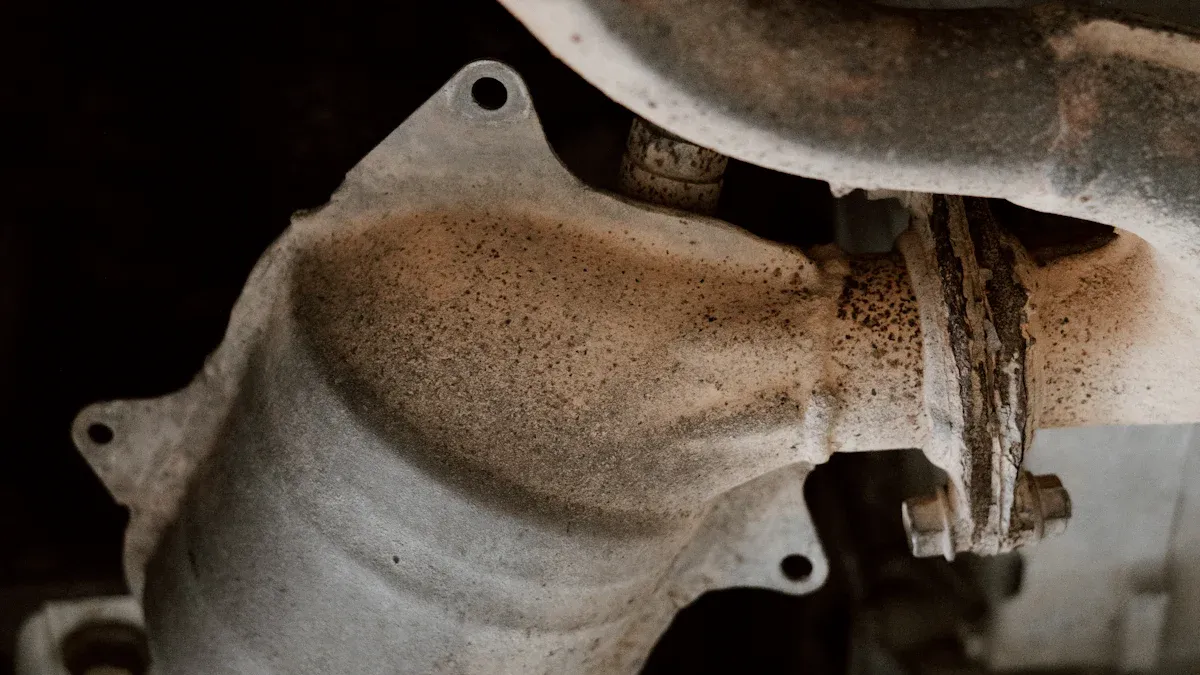
When you look inside a three-way catalytic particulate filter, you see many parts. Each part helps clean your car’s exhaust in a special way.
Tip: The honeycomb shape and porous walls help your car meet strict emission rules. They do this without slowing down the exhaust.
The three-way catalytic particulate filter uses special materials to work well. Some of these materials are rare and valuable metals.
| Metal | Role in Reaction |
|---|---|
| Platinum | Helps turn carbon monoxide and unburned fuel into safer gases |
| Palladium | Also helps change carbon monoxide and unburned fuel into less harmful substances |
| Rhodium | Changes nitrogen oxides into nitrogen and oxygen |
Other materials are also in the filter. Support materials like Y-stabilized zirconium oxide and cerium oxide-zirconium oxide help the filter last longer. They also help it work better. Some filters use zonally designed rhodium and palladium. This makes the filter more stable and active, even when it gets very hot.
New designs use advanced ceramics like cordierite and silicon carbide. These help the filter trap more particles. Some filters use nanomaterials like carbon nanotubes or graphene coatings. These help the filter handle heat and last longer. Bioinspired materials make special porous shapes that hold more ash. This means you do not have to clean or change the filter as often.
Some new filters can do more than one job. For example, some can remove both particles and nitrogen oxides at the same time. New coating methods help spread the precious metals more evenly. This makes the filter work better and use less metal.
Note: Additive manufacturing, like 3D printing, can make complex filter shapes. This helps the filter catch more particles and keeps the exhaust moving well.
The three-way catalytic particulate filter uses smart designs and materials. This keeps your car clean and efficient. You get better air and a car that meets tough pollution rules.
How the Filter WorksWhen you drive, your car’s engine makes bad gases. The three-way catalytic particulate filter changes these gases into safer ones. It uses two types of reactions: reduction and oxidation. Each reaction helps remove a different pollutant.

You use this filter to clean your car’s exhaust. It removes harmful gases and tiny particles. This helps your car meet emission rules and keeps the air around you cleaner.
You should check your filter every 75,000 miles or once a year. If you drive in heavy traffic or notice warning signs, check it more often. Replace it if you see damage or clogs.
You can try cleaning the filter with special cleaners or by driving at highway speeds. This helps burn off soot. For heavy clogs, you should visit a mechanic.
A clogged or damaged filter can make your engine work harder. You may notice weak acceleration, higher fuel use, or trouble starting. Fixing the filter keeps your engine healthy.
No, they are different. You use a three-way filter in gasoline cars. Diesel cars use a diesel particulate filter (DPF). Each filter targets different pollutants.
Please leave your requirements and contact information, and we will send you the quotation information as soon as possible.