Date: 2026.04.21 Click: 1

A spark plug helps your engine start. It does this by making a small electric spark. This spark lights the air and fuel mix inside the engine cylinder. The spark plug is an important part of the ignition system. If you use bad or old spark plugs, your engine may not work well. You might also notice these things:
Combustion is not as steady
The engine uses more fuel
The engine makes more emissions
A spark plug makes a tiny electric spark. This spark lights the air-fuel mix in your engine. It helps your engine start and run well.
The right spark plugs make your engine work better. They help save fuel and lower bad emissions.
Check your spark plugs often for damage. Look for problems like misfires or slow starts. This keeps your engine working its best.
Spark plugs are made from copper, platinum, or iridium. Each material has its own good points for lasting longer and working well.
Change your spark plugs when the manual says to. This helps your engine last longer and work better.
You can think of a spark plug as a small but powerful device that sits inside each cylinder of your engine. Spark plugs look like short metal tubes with a tip that sticks into the engine. You find them in gasoline engines, and they play a key role in making your car start and run smoothly.
Spark plugs have a simple job. They create a spark that lights the fuel and air inside the engine. This spark happens at just the right time to make the engine work. Without spark plugs, your engine would not start or run.
Manufacturers use different materials to make spark plugs. Here are the main types you might find:
Copper: This material conducts electricity very well, but it wears out faster than others.
Platinum: This type lasts longer and gives you a good balance between performance and durability.
Iridium: This material has the highest melting point. It lasts the longest and gives you steady performance.
You rely on spark plugs to start your engine every time you turn the key. The ignition system sends a high-voltage current to the spark plug. When the current reaches the tip, the spark plug creates a tiny spark. This spark jumps across a small gap at the tip of the plug.
That spark is what ignites the air-fuel mixture inside the cylinder. When the mixture burns, it creates a small explosion. This explosion pushes the piston down and makes the engine turn. You get power for your car because of this process.
Spark plugs do more than just start your engine. They help keep the combustion steady and clean. If you use the right spark plugs, your engine runs better, uses less fuel, and makes fewer emissions. You also get smoother acceleration and fewer problems with your car.
Spark Plug Parts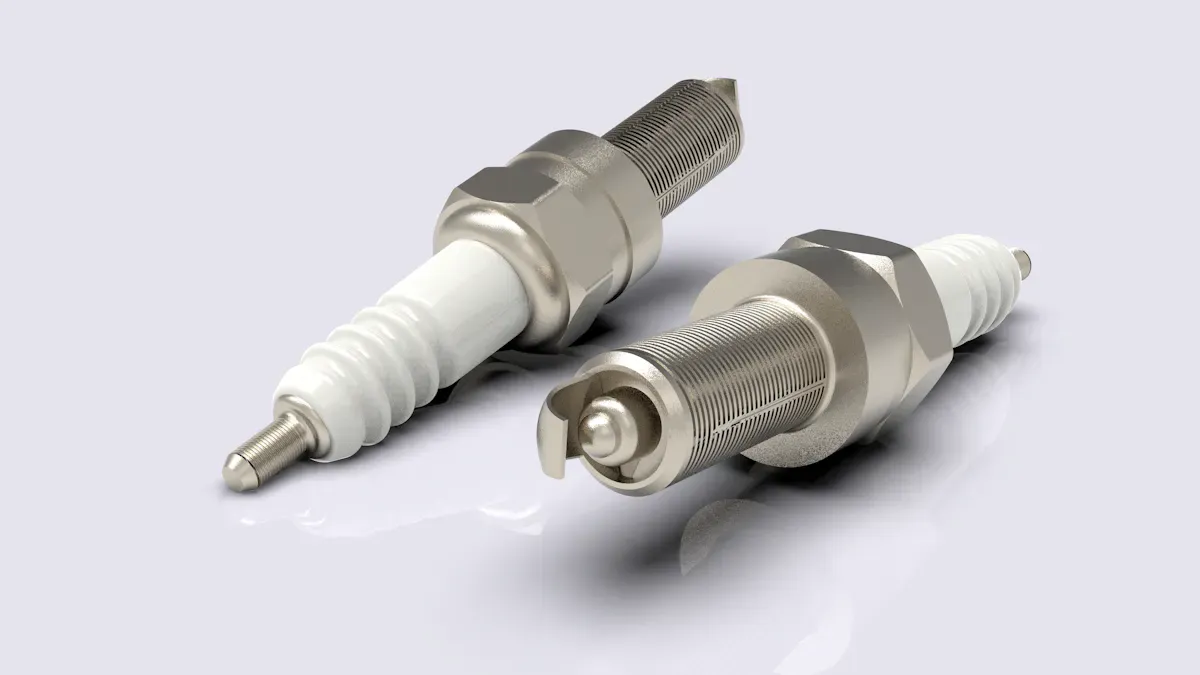
When you know the main parts of spark plugs, you can see how they work. Each part has a job that helps your engine run well and use fuel better. Here is a table that lists the main parts and what they do:
|
Component |
Contribution to Operation |
|---|---|
|
Center Electrode |
Makes the spark, which helps the engine start and run well. |
|
Ground Electrode |
Lets the spark jump across, so the engine starts every time. |
|
Ceramic Insulator |
Stops electricity from leaking out, so the spark goes where it should. |
|
Metal Shell |
Holds the spark plug together and helps move heat away, so it works right. |
|
Sealing Structure |
Keeps the spark plug tight and stops leaks, so the engine stays strong. |
The center electrode is in the middle of the spark plug. It brings electricity from the ignition system. When the electricity gets to the tip, it makes a spark. The spark jumps to the ground electrode. This lights the air and fuel mix in the cylinder. The center electrode is made from strong metals like copper, platinum, or iridium. These metals help it handle heat and electricity. This means the spark plug works better and lasts longer.
The ground electrode is across from the center electrode. There is a small gap between them. The spark jumps over this gap. The ground electrode finishes the electric path. You need a good ground electrode for the engine to start well. It helps the spark plug work every time you turn the key.
The ceramic insulator wraps around the center electrode. It keeps electricity from leaking out. This makes sure the spark goes to the right place. The ceramic insulator can take very high heat, up to 2,500 degrees. It is made from tough materials like ceramic and basalt. These materials help the spark plug last longer and keep resistance low.
The metal shell gives the spark plug its shape and strength. It holds all the parts together. It fits tightly into the engine. The metal shell also moves heat away from the tip. It sends the heat into the engine head. This keeps the spark plug cool and working well.
The sealing structure keeps the spark plug tight and safe. It uses special gaskets to stop gas from leaking out. This seal helps the engine keep its power and use fuel well. The sealing structure keeps the spark plug in place and stops leaks.
Spark Plug OperationTip: If you pick the right spark plugs and take care of them, your engine will run better and last longer.

You see the spark plug at work every time you start your car. The ignition system sends a strong electric charge to the spark plug. The center electrode receives this charge. When the voltage gets high enough, it jumps across the gap to the ground electrode. This jump creates a bright spark. You call this process spark generation. The spark happens inside the combustion chamber, right where the air-fuel mixture waits to be ignited.
If the spark plug does not make a strong spark, your engine may not start. You might hear the engine crank, but it will not run. This problem can happen if the ignition coil does not send enough voltage. A weak or missing spark leads to engine misfires and poor engine performance.
The ignition coil creates the high voltage needed for the spark plug.
Without a good spark, the engine cannot ignite the air-fuel mixture, causing combustion failure.
Problems with the ignition coil or spark plug can make the engine crank without starting.
When the spark jumps the gap, it lights the air-fuel mixture. This small explosion pushes the piston down and makes the engine turn. The timing of this spark is very important. If the spark happens too early or too late, the engine will not run smoothly. You may notice rough idling or even a misfire.
The spark plug must work with the ignition system to make sure the spark comes at the right moment. This teamwork helps your car start quickly and run without trouble. If you use high-quality spark plugs, you get a steady spark every time. This keeps combustion smooth and helps your car use fuel better.
Spark plugs do more than just make sparks. They also move heat away from the combustion chamber. When the spark plug fires, it gets very hot. If it stays too hot, it can cause problems like knocking or pre-ignition. These problems can damage your engine.
A colder heat range helps stop the spark plug tip from overheating. This prevents early ignition of the air-fuel mixture and avoids knocking.
When engine compression goes up, the temperature rises. The spark plug must get rid of heat faster to stop early combustion.
If the tip gets too hot, it can light the air-fuel mixture before the spark. This can hurt engine performance and even cause damage.
You need the right spark plug for your engine. If you choose the wrong one, you may see engine misfires or even engine damage.
The spark plug affects how well your engine runs. Good spark plugs give you a strong, steady spark. This helps the engine burn fuel completely and makes the ride smooth. You get better fuel economy and lower emissions when the spark plug works well.
High-quality spark plugs improve ignition efficiency. This leads to smoother combustion.
Better ignition means you use less fuel and get more power.
Spark plugs that give a steady spark help keep combustion smooth. This lowers emissions and boosts fuel efficiency.
The right spark plug can make your engine more responsive and powerful.
If you notice engine misfires, poor fuel economy, or slow starts, you may need new spark plugs. Keeping them in good shape helps your engine last longer and perform its best.
You count on your spark plug to start the fuel burning. It also helps control heat inside your engine. Every part helps your car run well. If you skip maintenance, your engine may misfire or not work right. Checking your spark plug often lets you find problems early:
You might notice the gap is wrong and causes misfires.
You can see stuff on the spark plug that stops the spark.
You can spot heat problems before they hurt your engine.
|
Component |
How It Helps Your Engine |
|---|---|
|
Heat Range |
Keeps the spark plug at the right temperature |
|
Gap |
Makes starting easy and steady |
|
Electrode Material |
Makes the spark strong and last longer |
Looking after your spark plug keeps your engine working well and saves fuel.
FAQYou might notice your engine misfires, starts slowly, or uses more fuel. You could also see rough idling or less power. If you see these signs, check your spark plugs.
Most spark plugs last between 20,000 and 100,000 miles. You should check your owner’s manual for the best schedule. High-quality plugs usually last longer.
Yes, you can change spark plugs with basic tools. Make sure the engine is cool. Follow your car’s manual for the right steps. If you feel unsure, ask a mechanic for help.
Using the wrong spark plug can cause engine misfires, poor fuel economy, or even engine damage. Always use the type your car’s maker recommends.
Absolutely! 🚗 Good spark plugs help your engine burn fuel better. You get more miles per gallon and save money on gas.
Please leave your requirements and contact information, and we will send you the quotation information as soon as possible.