Date: 2026.11.05 Click: 36
A half shaft seal and an axle seal are often the same part. But the terms can mean different seals, depending on your vehicle layout and context. That overlap causes a lot of confusion at the parts counter.
Terminology overlaps across front-wheel drive, rear-wheel drive, and independent versus solid axle designs. Some vehicles even use other names, like intermediate shaft seal, for the very same part.
You need the right seal for your specific driveline. Location, function, fit, and selection all matter here. Small naming differences can easily send you home with the wrong part, so check the part number carefully before you buy.
Key TakeawaysHalf shaft seals and axle seals often do the same job, but the right part depends on your vehicle's drivetrain layout.
Always check the part number for each side; left and right seals may differ even on the same vehicle.
Match the seal material to your transmission or differential fluid to prevent leaks and damage.
Inspect the shaft surface and bore before installing a new seal; a rough surface causes leaks.
Buy by specification, not by the label on the box, to avoid repeat repairs and save money.
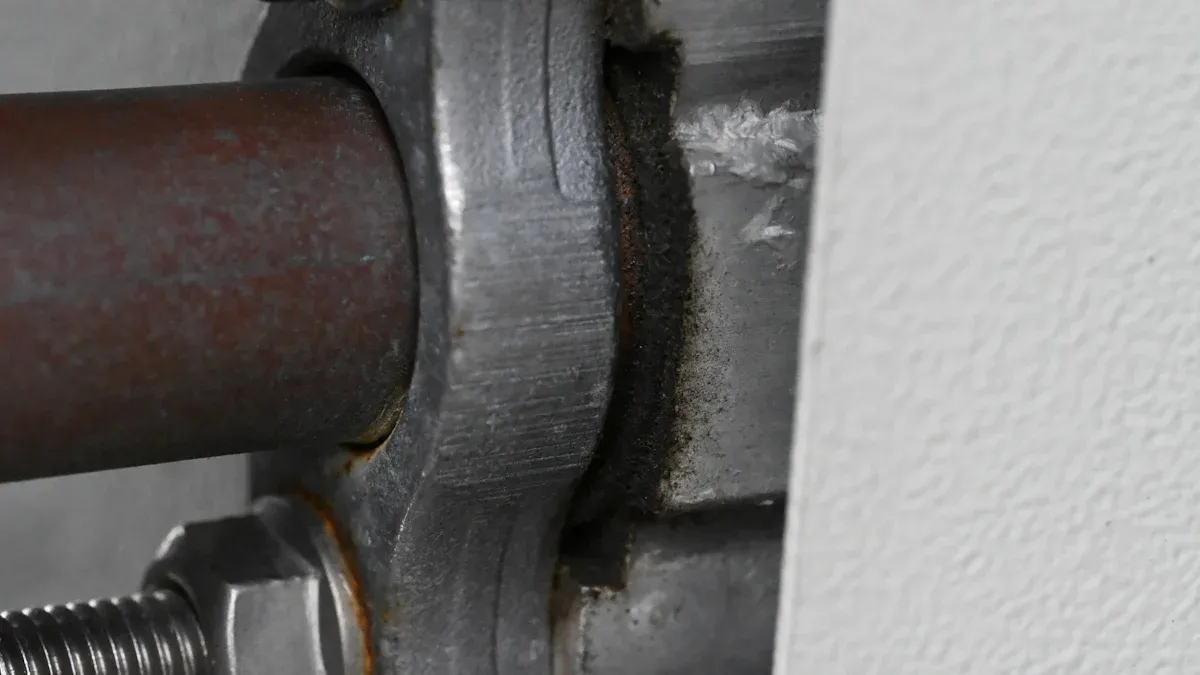
The half shaft seal sits where the half shaft exits the transaxle or differential. You will find this setup on most vehicles with independent suspension. The seal holds gear oil inside the housing and keeps road grit out. A healthy seal protects the joint and the fluid inside it.
Watch for warning signs around this area. North Seattle Auto Repair lists grease around the inside of a wheel, grease on suspension or brake components, and a torn or cracked CV boot as common clues. A damaged boot may leak grease. Once lubrication is lost and contamination enters the joint, internal wear can develop quickly. You may also spot fluid leakage near an axle seal or a loose boot clamp.
On some vehicles, the driver's-side component is technically an intermediate shaft seal. The half shaft on that side may connect through a short intermediate shaft before it reaches the transaxle. This extra joint changes the part name, even though the job stays the same. You still get a shaft seal that keeps fluid in and dirt out.
Do not assume both sides use the same part. A forum poll on the Fiesta ST Forum shows owners reporting both driver side and passenger side seals leaking transmission oil. One owner described a passenger side axle seal replaced for the third time in less than five months. That pattern shows why you should check the part number for each side before you order.
What Is an Axle Seal?
An axle seal does two jobs at once. It keeps fluid inside the transmission or differential housing, and it blocks dirt and water from getting in. Lugnut4x4 notes that a worn part lets gear oil escape, and low fluid can damage the gears inside. Rick's Auto Service puts it simply: this component keeps transmission fluid from leaking out. A small leak turns into a big repair fast. Fluid escapes, the level drops, and metal parts grind against each other. A dry housing also runs hot and wears quickly. Replace the part early, before the damage spreads.
You will find this part in a few places. On a semi-float live axle, it sits at the outer end of the tube. On a truck or SUV with CV joints up front, it sits at the inboard end where the shaft enters the differential. On a front-wheel drive vehicle, it sits at the inboard end where the axle enters the transaxle. The exact spot changes with the design. The goal stays the same: hold the fluid in and keep the grit out.
Left and right axle seals do not always match. Owners on the Chevy HHR Forum report different part numbers for each side of a 2009 HHR 2.2 with the 4T45E automatic.
|
Attribute |
Right (passenger) side |
Left (driver's) side |
|---|---|---|
|
Part number |
National 5693 or equivalent |
Different; the National 5693 will not fit |
|
Shaft bore |
1.648 |
roughly 1.448 |
|
Sleeve |
Comes with a sleeve pressed onto the stub |
No sleeve; rides on the CV housing |
One forum member also suggests the driver side outer piece may be a dust boot, with the oil seal sitting deep inside. That detail matters when you order parts. A kit listed for both sides may not fit both sides.
These parts usually tap into place with a driver. Removal often calls for a slide hammer. Check wheel bearings while the unit is out, since a failed bearing can damage the new part and cause leaks again. Match the part to the side, not to the label on the box.
Half Shaft Seal vs. Axle Seal ComparisonBoth parts do the same basic job, so their sealing capability tracks the same factors: lip design, spring tension, and how well the bore and shaft surface match. A half shaft seal and an axle seal hold fluid against a spinning shaft, and both rely on a clean, round bore to sit square. Fit matters more than the label. A seal that sits crooked will leak no matter how good the rubber is.
Durability depends on heat, runout, and contamination. A shaft that wobbles wears the lip unevenly and shortens life. Grit that reaches the lip acts like sandpaper. The design and material differences between brands often matter more than the name on the box. A quality seal with the right lip profile outlasts a cheap one every time.
Watch for the classic signs of a leaking cv axle seal. Grewals Automotive notes a puddle or drip under the rear of the vehicle, and gear oil often looks thicker than engine oil with a strong, distinct odor. You may also find greasy residue around a rear wheel, axle shaft, or brake backing plate. Newnum's Garage adds a greasy film on the inside of the wheel and tire, plus a low fluid level in the transmission or differential. A whining or humming noise that grows louder as you accelerate points to low lubrication. Clicking or popping through sharp turns is the most common sign of a bad CV joint, according to Firestone Complete Auto Care. That noise comes from a contaminated outer joint whose bearings bind and slip. Grease flung onto hot metal can also produce a burning smell.
The seal must tolerate whatever fluid sits behind it. Common gear oils and automatic transmission fluids attack the wrong elastomer over time. The rubber swells, softens, or hardens, and the lip loses its grip on the shaft. That is how a slow weep becomes a steady drip.
Check the fluid spec for your transmission or differential before you buy. A seal rated for gear oil may not suit a modern low-viscosity transmission fluid. The same logic applies to cv axle seals on independent suspension cars. Match the elastomer to the fluid, and match the lip to the shaft surface finish.
A failed seal rarely fails alone. Fluid leaks drop the level, and the gears run dry. You then face a much larger repair. Find the source of the leak early, confirm the seal is the cause, and replace it before the damage spreads. A small puddle today beats a rebuild tomorrow.
Hub Oil Seal vs. Axle SealThese two parts protect different areas, so you should not treat them as swaps. A hub oil seal guards the wheel hub assembly, where the wheel attaches to the vehicle. It stops grease from escaping the hub bearings and blocks dirt, water, and debris from getting in. Dalianyingyu.com notes that it acts as a barrier between the rotating hub parts and the stationary chassis. Clean grease keeps wheel bearings spinning smoothly with less friction and wear.
An axle seal works farther inboard. It sits where the driveshaft or axle connects to the transmission or differential. Its job is to hold transmission fluid or gear oil inside the housing. Dalianyingyu.com explains that this keeps lubrication where it belongs and helps prevent overheating and mechanical failure. A hub oil seal protects the corner of the vehicle. An axle seal protects the driveline housing.
|
Seal |
Location |
Function |
|---|---|---|
|
Hub oil seal |
At the wheel hub assembly, where the wheel attaches |
Keeps grease in the hub bearings; blocks dirt, water, and debris |
|
Axle seal |
Where the driveshaft or axle meets the transmission or differential |
Holds transmission fluid or gear oil inside the housing |
Match each seal to its own location. Reach for a hub oil seal when you service a wheel hub or repack bearings. Choose an axle seal when you pull a shaft from the transaxle or differential. Dalianyingyu.com reports that hub seals use rubber, silicone, or synthetic polymers built to handle heat, friction, and weather. That material choice suits the harsh conditions at the wheel. Both parts prevent leaks, and each one earns its place in the design.
Application Fit for CV Axle SealsIndependent suspension lets each wheel move on its own. The half shaft seal fits this layout well. It sits where the shaft leaves the transaxle, and it flexes with the joint as the wheel travels. You will find this setup on most modern cars and many crossovers.
A solid axle works differently. The wheels connect through one rigid tube, so the shaft stays in a fixed line. Here a traditional axle seal fits best at the outer end of the tube. Each design has a clear home, and neither one is better for every vehicle.
Front-wheel drive cars send power through a transaxle. The cv axle seals sit at the inboard joints, one on each side. These seals hold fluid in the transmission or differential housing while the joints steer and flex.
Rear-wheel drive trucks and SUVs often use a solid drive axle. A traditional seal guards the housing where the shaft exits toward the wheel. Some independent rear setups still use a half shaft seal instead. Check your layout before you order, because the same model year can vary.
Match the seal to the axle design, not the label. A front-wheel drive car and a rear-wheel drive truck may share a part name but not a part number. Confirm the fit on both sides, and check the fluid spec while you have the seals out.
Material Standards and Oil ResistanceThe rubber compound decides how long a seal survives its fluid. Nitrile rubber handles many gear oils and greases well at moderate temperatures. Fluoro-elastomer costs more, yet it resists heat and aggressive fluids far better. Silicone and polyacrylate appear in specific applications where their properties fit.
A real catalog example shows how detailed these specs get. The National 710895 drive axle shaft seal uses a fluoro-elastomer sealing material and a bi-directional lip design, according to PartCatalog. It measures 1.811 inches inside diameter, 3.079 inches outside diameter, and 0.472 inches thick. The metric equivalents are 46.000 mm, 78.200 mm, and 12.000 mm. It cross-references Ford OE numbers 2R8W-4B416-AA and 2R8Z-4B416-AA. That level of detail tells you the compound and the dimensions before you buy.
A spec sheet tells you more than a part name ever will. Look for the elastomer type, the temperature range, and the fluid compatibility list. A lip seal rated for gear oil may fail quickly in low-viscosity transmission fluid. Check the rating against your own fluid spec.
The bi-directional lip design on the National 710895 matters too. A bi-directional sealing lip holds fluid from either rotation direction, which suits shafts that spin both ways. A single-direction lip may leak if you install it backward. Read the ratings, confirm the lip type, and match the seal to your axle and fluid. A part number alone will not tell you whether the compound suits your application.
Cost DifferencesA half shaft seal for a common front-wheel drive transaxle usually costs very little on its own. The part is a small ring of rubber and metal, and mass production keeps the price low. Cost climbs when the design adds a sleeve, a special lip profile, or a dealer-only fitment. The Chevy HHR example shows this pattern well. The passenger side comes with a sleeve pressed onto the stub, and the driver side does not. That single difference can shift the price between the two sides of one car.
Kits change the math too. A seal-and-sleeve kit costs more than a bare part, yet it may save you a second trip. Labor often outweighs the part cost anyway. Removal may call for a slide hammer, and a job on a rigid tube design can mean more disassembly than a transaxle job. Check the part number for each side before you compare prices. Budget for the whole repair, not just the box on the counter.
A premium compound such as fluoro-elastomer costs more than nitrile upfront. That extra spend pays off on a vehicle you plan to keep, especially one that runs hot or uses an aggressive fluid. A cheap seal that fails in months means you pay for the part twice and the labor twice. Compare the price gap against the cost of a repeat repair, and the upgrade often wins.
Upgrading also makes sense when a leak has already returned. One Fiesta ST owner replaced a passenger side axle seal three times in under five months. At that point, a better part and a close look at the shaft surface beat another budget replacement. Inspect the bore and the bearing while the shaft is out. A worn bearing ruins a new part fast, and that turns a smart upgrade into a wasted purchase. Ask what your fluid spec demands before you pay for the upgrade.
Choosing the Right Axle SealParts catalogs can lead you astray. Some outlets list one seal kit for both sides of a vehicle, even when the left and right parts actually differ. Treat that listing with suspicion. Check the part number for each side before you order.
Real-world examples show why this matters. Members on TDIClub report that the right seal is different than the left on their cars. One part number, 02J409528A, covers a seal and flange assembly, while 084409189B is just the seal. The same thread notes fitment issues with aftermarket right front axle seals. A catalog that lumps both sides together will not warn you about that.
Solid axle trucks show the same pattern. Comanche Club members list a front D30 (non-disconnect) part, 710068 or equivalent, as interchangeable left and right. The rear D44 tells a different story. It takes a Timken 9912S outer seal, a Timken 481837 inner seal, and a Timken 2689S for an unspecified position. Three part numbers for one axle housing. Order by position, not by guesswork.
A worn or pitted axle sealing surface makes any new part leak again. Inspect the shaft before you install anything. A speedi-sleeve may rescue a damaged surface, yet the right fix starts with the correct replacement part for your exact vehicle configuration.
Work through these points before you buy. Each one narrows the field fast.
|
Check |
What to confirm |
|---|---|
|
Axle type |
Independent suspension or solid axle; this decides where the seal sits |
|
Drivetrain layout |
Front-wheel drive transaxle, rear-wheel drive solid axle, or independent rear |
|
Side |
Left and right part numbers, checked separately |
|
Lubricant spec |
Gear oil or automatic transmission fluid, matched to the elastomer |
|
Seal bore and shaft |
Clean, round bore; smooth sealing surface with no pits |
Start with the axle type. A cv axle seal on an independent suspension car sits at the inboard joint. A traditional seal on a solid drive axle sits at the outer end of the tube. Next, confirm the drivetrain layout, because the same model year can vary. Then check each side by part number.
Match the seal to the fluid inside your transmission or differential. A compound rated for gear oil may fail in low-viscosity fluid. Finally, inspect the seal bore and the shaft surface. A crooked seat or a rough shaft guarantees leaks, no matter how good the rubber is.
Buy by specification, not by the label on the box. That habit saves you a second trip and a repeat repair.
You now know the two terms usually describe the same sealing job. Context decides which part you actually need. Drivetrain layout and axle type tell you where the seal sits and what it must hold back. A front-wheel drive transaxle and a solid rear axle ask for different shapes, even when the label reads the same.
Match the seal to your vehicle's axle design and lubricant spec, not the name on the box. Double-check the left and right part numbers before you pay. That habit keeps fluid inside your transmission or differential and saves you a repeat repair.
FAQNo. A hub oil seal protects the wheel hub bearings. An axle seal holds fluid inside the transaxle or differential. Each part fits its own location. Use a hub oil seal at the wheel and an axle seal at the housing.
Replace a hub oil seal when you see grease around the wheel or hear bearing noise. Inspect the hub oil seal during any brake or bearing job. A worn hub oil seal lets grit reach the bearings. Check the hub oil seal each time you repack bearings.
Heat, worn bearings, and a rough sealing surface shorten hub oil seal life. A bent shaft damages the hub oil seal lip. Dirt speeds up wear on any hub oil seal. Replace the hub oil seal when the lip hardens or cracks.
Not always. A seal can weep slowly before you notice a drip. Check for residue around the shaft. Catch a failing seal early, and you avoid a larger repair.
You can seat most hub oil seal parts with a proper driver. Tap the hub oil seal squarely into the bore. A crooked hub oil seal leaks fast. Confirm the hub oil seal sits flush before you reassemble the hub.
Please leave your requirements and contact information, and we will send you the quotation information as soon as possible.